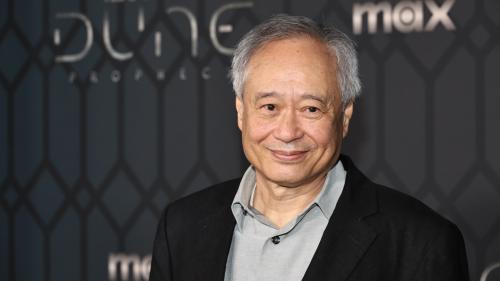
 Ang Lee is one of the most celebrated and boundary-defying filmmakers of the modern era.
A two-time Academy Award winner for Best Director, the Taiwanese-born auteur has demonstrated an extraordinary ability to tell deeply human stories across an astounding range of genres — from period romance to martial arts epic, from superhero blockbuster to intimate gay love story.
His films are marked by a profound humanism, breathtaking visual artistry, and a recurring exploration of repression, identity, and the tension between duty and desire.
He became the first person of color to win the Academy Award for Best Director in 2006, and cemented his legacy with a second Oscar win in 2013.
Profile
| Full Name | Li An (李安) |
| Stage/Professional Name | Ang Lee |
| Born | October 23, 1954 |
| Age | 71 years old |
| Birthplace | Chaozhou, Pingtung County, Taiwan |
| Nationality | Taiwanese-American |
| Occupation | Film Director, Producer, Screenwriter |
| Spouse | Jane Lin (married 1983) |
| Children | Haan Lee, Mason Lee |
| Relationship | Married |
| Net Worth | $15 million – $20 million |
Early Life
Ang Lee was born Li An on October 23, 1954, in Chaozhou, Pingtung County, Taiwan. His parents were teachers who had fled mainland China to Taiwan during the Chinese Civil War of the 1940s. Growing up in a household shaped by Confucian values and intellectual discipline, Lee was expected to excel academically and honor his family through professional achievement.
His father, Lee Sheng, was a strict and respected high school principal — later serving as the head teacher at Tainan First Senior High School — who had high academic expectations for his son. As a young man, Ang Lee was not a particularly gifted student in the traditional sense. He initially failed the university entrance examination in Taiwan, a profound disappointment in a culture that placed enormous emphasis on academic credentials.
Despite this early setback, Lee was a passionate dreamer with a deep love of cinema. As a child, he was an avid moviegoer who found in films a world of endless possibility. After failing his university entrance exams, he enrolled at the Taiwan Academy of Art (later known as the National Taiwan University of Arts), where he discovered his true passion — not academics, but performance and storytelling. He graduated in 1975.
Education
After completing his degree at the Taiwan Academy of Art, Ang Lee made the bold decision to pursue filmmaking in the United States. In 1978, at the age of 23, he moved to America to study theater at the University of Illinois at Urbana-Champaign, where he earned a Bachelor of Fine Arts (BFA). He then attended the prestigious Tisch School of the Arts at New York University, earning a Master of Fine Arts (MFA) in Film Production. His graduate thesis film, Fine Line, won the Best Film and Best Director awards at NYU — an early indicator of his exceptional talent. While at NYU, he also worked on fellow student Spike Lee’s acclaimed short film Joe’s Bed-Stuy Barbershop: We Cut Heads (1983).
Career
After graduating from NYU in 1984, Ang Lee spent six grueling years attempting to break into Hollywood, pitching ideas to studio executives without success. It was a period of deep frustration and self-doubt. He took on domestic responsibilities at home while his wife Jane supported the family financially — a period he has described candidly in interviews as humbling but ultimately formative.
His breakthrough came when he entered two screenplays in a Taiwanese government screenplay competition — and placed first and second. This dual triumph attracted the attention of Taiwanese producers, and in 1992 — at the age of 37 — he directed his first feature film, Pushing Hands. The film won several awards in Taiwan and launched what became known as his “Father Knows Best” trilogy — three films examining the conflict between traditional Chinese values and modern Western life, all featuring veteran actor Sihung Lung as a patriarchal figure.
The trilogy’s second entry, The Wedding Banquet (1993), earned Academy Award and Golden Globe nominations for Best Foreign Language Film and won the Golden Bear at the Berlin International Film Festival. The third film, Eat Drink Man Woman (1994), also received a Best Foreign Language Film Oscar nomination and was praised worldwide for its sensory richness and emotional depth.
These successes led to Lee being chosen to direct Sense and Sensibility (1995) — a Jane Austen period adaptation starring Emma Thompson, Kate Winslet, and Hugh Grant. The film received a Best Picture Oscar nomination and won Best Adapted Screenplay for Emma Thompson. Lee was named Best Director of the year by both the National Board of Review and the New York Film Critics Circle, proving definitively that he could master English-language Hollywood filmmaking.
He followed with The Ice Storm (1997), a dark drama about suburban dysfunction in 1970s New England that won Best Screenplay at the Cannes Film Festival, and then the action epic Ride with the Devil (1999).
In 2000, Lee released what many consider his masterpiece — the martial arts epic Crouching Tiger, Hidden Dragon. The film was a global phenomenon, winning four Academy Awards (including Best Foreign Language Film), four BAFTA Awards, and a Golden Globe for Best Director. It remains one of the highest-grossing foreign-language films in American cinema history.
His foray into superhero cinema with Hulk (2003) was commercially disappointing but artistically ambitious — Lee became the first Asian director to helm a comic book film.
In 2005, Lee directed Brokeback Mountain — an intimate, devastating love story between two cowboys that swept through award season and made cultural history. The film won Lee the Academy Award for Best Director in 2006, making him the first person of color ever to win the award. It also won Best Adapted Screenplay and Best Original Score.
After the critically acclaimed but controversial Lust, Caution (2007) and the lighter Taking Woodstock (2009), Lee returned to the top of the industry with Life of Pi (2012) — a visually stunning 3D adaptation of Yann Martel’s beloved novel. The film won Lee his second Academy Award for Best Director in 2013, along with Oscars for cinematography, score, and visual effects. He became the first director ever to win Best Director for a 3D film.
His subsequent films — Billy Lynn’s Long Halftime Walk (2016) and Gemini Man (2019) — were experimental in format (shot in unprecedented high frame rates) but received mixed results at the box office. In 2025, the Directors Guild of America honored him with its prestigious Lifetime Achievement Award.
Awards & Nominations
- Academy Award for Best Director — Brokeback Mountain (2006)
- Academy Award for Best Director — Life of Pi (2013)
- Golden Bear — The Wedding Banquet (Berlin Film Festival, 1993)
- Golden Globe Award for Best Director — Crouching Tiger, Hidden Dragon (2001)
- Four Academy Awards for Crouching Tiger, Hidden Dragon (2001)
- BAFTA Award for Best Film Not in the English Language — Crouching Tiger (2001)
- Directors Guild of America Lifetime Achievement Award (2025)
- National Board of Review — Best Director for Sense and Sensibility (1995)
- New York Film Critics Circle — Best Director for Sense and Sensibility (1995)
- Order of Brilliant Star — Government of Taiwan
Social Media
Ang Lee maintains a relatively low-key social media presence in keeping with his private nature, though official updates about his projects are shared through film studio channels and press appearances.
Personal Life
Ang Lee married Jane Lin in 1983, while he was still studying at NYU. Jane, a microbiologist, was the primary breadwinner during the long, difficult years when Lee was struggling to break into filmmaking — a sacrifice he has consistently acknowledged with deep gratitude in interviews. The couple has two sons: Haan Lee (born 1984) and Mason Lee (born 1990), both born in Illinois. Mason Lee has followed his father into acting and has appeared in several films.
Ang Lee’s father, Lee Sheng, passed away in 2004 at the age of 91. Their complicated relationship — defined by paternal expectation and the son’s unconventional path — has been a recurring theme in Lee’s personal reflections and is mirrored in the father-son dynamics of his Taiwanese trilogy films.
Net Worth
Ang Lee’s estimated net worth is between $15 million and $20 million. His wealth has accumulated through decades of directing major Hollywood and international productions, producer credits, and his status as one of the most in-demand filmmakers in the world. His Oscar wins have substantially elevated his market value as a director, enabling him to command top-tier fees for his projects.
Filmography
- Pushing Hands (1992)
- The Wedding Banquet (1993)
- Eat Drink Man Woman (1994)
- Sense and Sensibility (1995)
- The Ice Storm (1997)
- Ride with the Devil (1999)
- Crouching Tiger, Hidden Dragon (2000)
- Hulk (2003)
- Brokeback Mountain (2005)
- Lust, Caution (2007)
- Taking Woodstock (2009)
- Life of Pi (2012)
- Billy Lynn’s Long Halftime Walk (2016)
- Gemini Man (2019)
FAQs About Ang Lee
Who is Ang Lee?
Ang Lee is a Taiwanese-American film director, producer, and screenwriter. He is a two-time Academy Award winner for Best Director, known for Brokeback Mountain and Life of Pi.
How old is Ang Lee?
Born October 23, 1954, he is 71 years old as of 2026.
How many Oscars has Ang Lee won?
He has won two Academy Awards for Best Director — for Brokeback Mountain (2006) and Life of Pi (2013).
Was Ang Lee the first Asian to win Best Director Oscar?
Yes. In 2006, he became the first person of color — and the first Asian director — to win the Academy Award for Best Director.
Who is Ang Lee’s wife?
He is married to Jane Lin, a microbiologist, whom he wed in 1983.
What is Ang Lee’s net worth?
His estimated net worth is between $15 million and $20 million.
Conclusion
Ang Lee is simply one of the greatest filmmakers who has ever lived. His willingness to cross genres, languages, and cultural boundaries — and his unfailing ability to find universal humanity within every story he tells — places him in a category occupied by very few directors. From the delicate cultural tensions of his Taiwanese trilogy to the sweeping romanticism of Crouching Tiger, Hidden Dragon, the quiet devastation of Brokeback Mountain, and the visual miracle of Life of Pi, Ang Lee has created a body of work that will endure for generations. His legacy as both a pioneering Asian filmmaker and a master storyteller is utterly secure.